
KEY TAKEAWAY
The project conditions should determine the solar lighting configuration.
A reliable solar street light is not selected by wattage alone. The right configuration starts with the site, the lighting task and the operating profile, then aligns the luminaire, optics, solar panel, battery and control strategy as one system.
1. Installation location and solar resource
Start with the country, city or project coordinates. Local solar irradiation, seasonal weather, temperature and shading determine how much energy the panel can collect and how much reserve the battery needs.
A product that performs well in a dry, high-irradiation location may need a larger panel or battery in a cloudy coastal region. Nearby trees, buildings, mountains and dust exposure should also be reported before the configuration is finalized.
- Country, city or coordinates
- Typical rainy or cloudy season
- Any shading between 9:00 and 15:00
- Ambient temperature range and dust exposure
2. Road or area geometry
Road width, pole height, pole spacing, setback and mounting arrangement define the optical problem. A single-side road layout, staggered layout and opposite layout do not produce the same uniformity even when the luminaire wattage is identical.
For parks, courtyards, parking areas and security zones, provide the area dimensions and mounting positions. A drawing, marked satellite image or simple sketch is often more useful than a generic request for a certain wattage.
3. Required illumination and uniformity
State the target average illuminance in lux, the minimum illuminance when applicable, and any required uniformity or road-lighting standard. If no formal target exists, describe the application and expected visual task so the optics and mounting height can be selected responsibly.
Lumens describe light output; lux describes how much light reaches the surface. They are related, but they are not interchangeable. A photometric simulation is the correct way to verify a road or area layout before a large project order.
4. Nightly operating profile
Define how many hours the light must operate and whether full output is required all night. Many projects use a staged profile: full output during peak hours, reduced output during low traffic and increased output when a sensor detects movement.
The controller profile directly affects battery capacity and solar panel size. A clear schedule is more useful than the phrase 'dusk to dawn' because night length and traffic requirements vary by season and location.
- Total operating hours per night
- Hours at 100% output
- Permitted dimming levels
- PIR or microwave sensor requirement
5. Backup-night requirement
Autonomy is the number of low-sun days the system should support without normal solar charging. Higher autonomy improves resilience but also increases battery and panel requirements, product size and cost.
Specify the required backup nights and the acceptable reduced-output strategy during extended bad weather. The final value should reflect local climate, project criticality and maintenance access rather than a generic maximum claim.
6. System architecture and service strategy
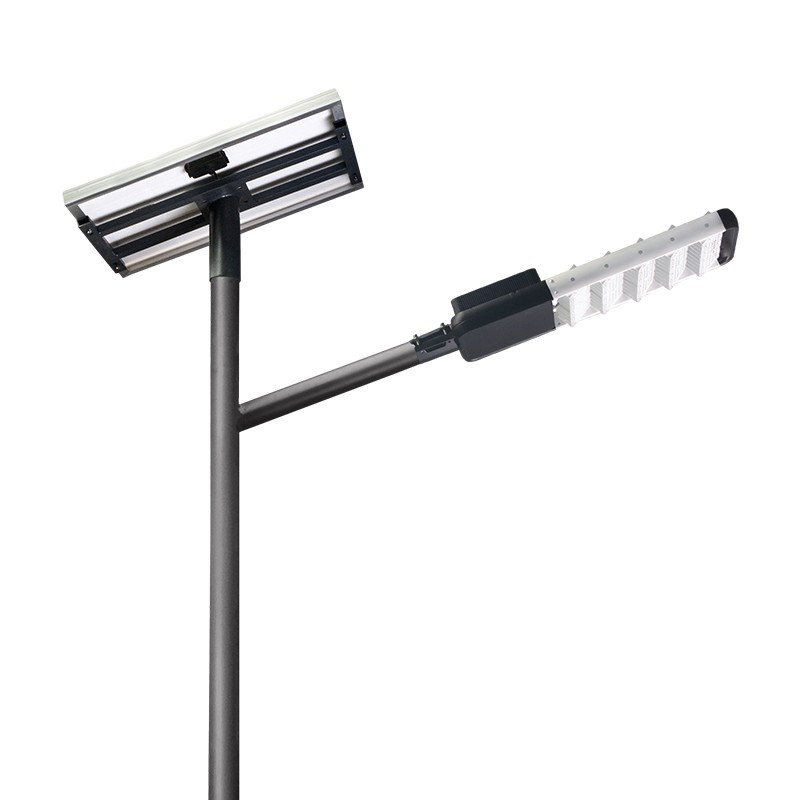
All-in-one lights combine the main components in one luminaire for fast installation. All-in-two systems keep the panel separate while integrating the luminaire, controller and battery. Split systems separate the principal components for maximum sizing flexibility and field service access.
Choose the architecture around pole design, solar orientation, maintenance practice, vandalism risk, project power and visual requirements. The comparison guide below explains the trade-offs in detail.
7. Quantity, customization and delivery constraints
Project quantity affects production planning, packaging, spare-parts strategy and shipping. Include logo, color, label, carton, language, certification and documentation requirements at the beginning rather than after the technical configuration is approved.
For the fastest first review, send one project brief containing the seven inputs above, the target delivery window and any tender documents. Reluxlight can then recommend a product architecture and identify the information still required for photometric and energy validation.
FREQUENTLY ASKED QUESTIONS
Questions buyers ask before configuration
Can solar street lights be selected by wattage alone?
No. Wattage is only one input. Location, road geometry, optics, operating profile, autonomy and control strategy must be considered together.
What information is needed for a photometric proposal?
Provide the road or area dimensions, pole height, spacing and arrangement, target lux or applicable standard, and the preferred luminaire position.
How many backup nights should a project specify?
The correct autonomy target depends on local weather, project criticality and the permitted dimming profile. It should be agreed during energy-system sizing.
When should a buyer request a split solar street light?
Split systems are useful when a project needs flexible solar-panel orientation, larger energy capacity, high output or easier access to separately mounted components.