
KEY TAKEAWAY
The project conditions should determine the solar lighting configuration.
The best solar light starts with the lighting task, not the product name. Roadway, landscape, security and architectural applications require different mounting heights, optical distributions, energy reserves and service strategies.
Start with the area that must be illuminated
Roads and large open areas need controlled distribution, mounting height and uniformity. Paths and gardens prioritize visual comfort and lower mounting positions. Security zones often need broad coverage, fast installation and sensor-based control.
Define the surface dimensions, user activity and required operating hours before comparing wattage or catalogue images.
Match the product family to the lighting task
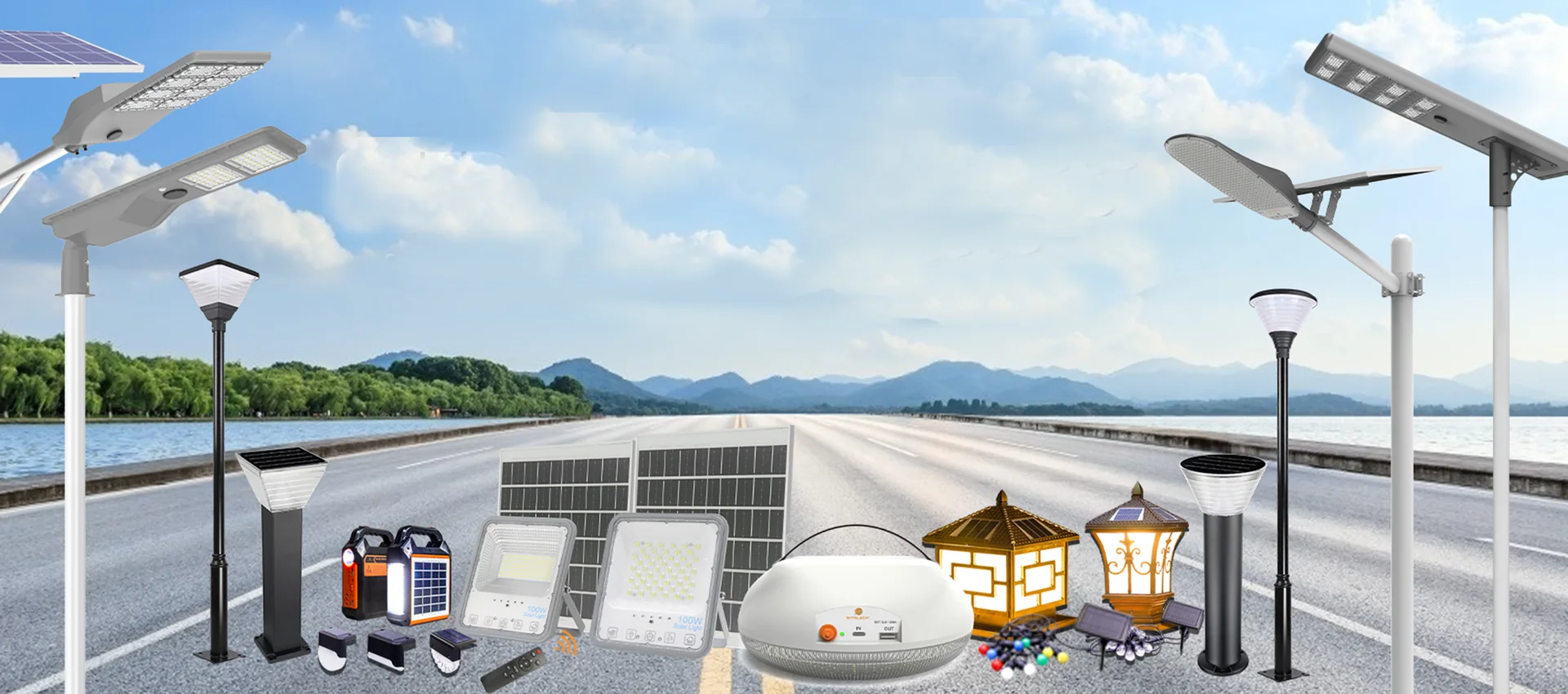
Solar street lights serve roads, parking lanes and larger circulation areas. Garden and lawn lights support pedestrian-scale landscapes. Flood lights cover flexible area and security applications, while wall lights suit entrances, façades and perimeter locations.
- Street lighting: roads, parking and circulation
- Garden and lawn lighting: paths and landscape zones
- Flood lighting: flexible area and security coverage
- Wall lighting: entrances, façades and perimeter use
Compare optics, mounting and energy as one system
A suitable housing does not guarantee a suitable project result. Beam distribution, installation height, pole or wall position, solar-panel exposure, battery reserve and controller profile must work together.
For commercial quantities, request a photometric layout and an energy configuration based on the site rather than selecting only from nominal lumen or watt values.
Plan service access and project documentation
Confirm how the battery, controller, luminaire and solar panel can be accessed after installation. Also define required drawings, labels, packaging, spare parts, certifications and operating instructions before production approval.
FREQUENTLY ASKED QUESTIONS
Questions buyers ask before configuration
Which solar light is best for a roadway?
Use a solar street-lighting system selected around road width, pole height, spacing, optical distribution, operating profile and local solar resource.
Can a solar flood light replace a street light?
It can cover some open areas, but road projects normally require purpose-selected optics and a verified pole layout for uniformity.
What should be compared besides lumens?
Compare distribution, mounting height, energy reserve, control profile, service access, weather exposure and project documentation.
When is a photometric simulation needed?
Use a simulation whenever the project has a target lux level, uniformity requirement, road layout or significant commercial quantity.