
KEY TAKEAWAY
What this means for solar-lighting buyers and project teams.
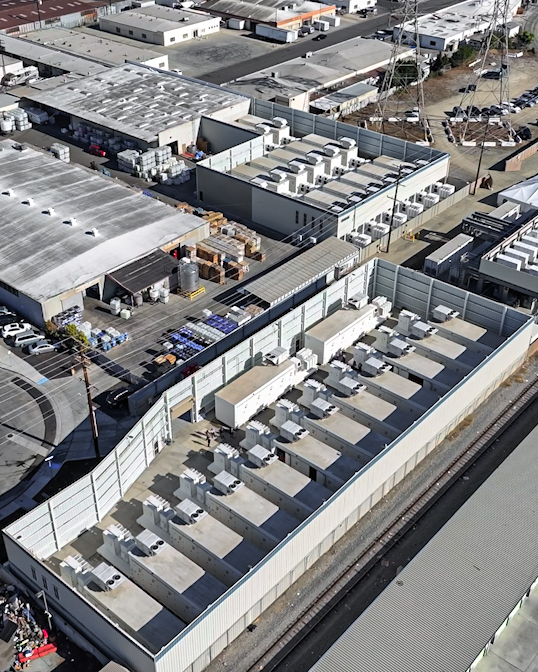
Georgia Power announced on September 15 that the 128 MW Robins Battery Facility near Warner Robins, Georgia, had achieved commercial operation. The company says the system can deliver stored energy to the grid for up to four hours and is paired with the nearby Robins Solar Facility. It is an external project, not a Reluxlight installation.
What Georgia Power announced
Georgia Power reports commercial operation of the 128 MW Robins Battery Facility and says it can deliver stored energy to the grid for up to four hours. The announcement places the facility near Warner Robins and says it is paired with the nearby Robins Solar Facility.
The release is evidence of the announced operating milestone, not a complete operating dataset. It does not define dispatch commitments, usable energy, reserve settings, cycle limits, auxiliary consumption or delivered performance under every grid condition. Those details require the applicable project and operating documentation.
Translate duration statements into procurement questions
A statement that a battery can deliver energy for up to four hours is a service description under the operator's stated context. It should not be treated as a universal runtime. Actual duration depends on the dispatched power, usable-energy limits, reserve state of charge, conversion losses, temperature, degradation and control settings.
The same discipline applies to solar-lighting batteries. A buyer should start with the required night-time load and lighting schedule, then verify seasonal energy balance, battery protection, dimming strategy and the evidence used for acceptance. Reluxlight did not develop, supply or operate the Robins project.
Evidence to request for a battery-backed service
For an infrastructure specification, the battery headline should be connected to a defined, testable service.
- Rated and usable energy, with the conditions under which each value applies
- Required power, duration, response time and reserve state of charge
- Seasonal load profile and solar or grid charging assumptions
- Control logic for dispatch, alarms, derating and load shedding
- Warranty limits, thermal operating range and expected maintenance actions
- Commissioning test steps and the owner data to be handed over
FREQUENTLY ASKED QUESTIONS
Questions this industry update may raise
Is the Robins Battery Facility a Reluxlight project?
No. Georgia Power's release concerns an external project; Reluxlight did not develop, supply or operate it.
Does 'up to four hours' guarantee four hours for every battery duty?
No. Delivered duration depends on power level, usable energy, reserves, losses, temperature, degradation and controls.
Why is this relevant to solar lighting?
Off-grid lighting also needs a defined load profile, energy balance, battery limits, control logic and acceptance test rather than a battery headline alone.
SOURCES