
KEY TAKEAWAY
What this means for solar-lighting buyers and project teams.
The strongest procurement lesson is that solar generation and lighting performance should be designed as parts of one public facility, not as isolated equipment packages. Charlottesville's Fire Station 1 combines a 31 kW rooftop PV array with daylight access, efficient building systems and light-pollution reduction, showing how project teams can connect energy, occupant needs and site impact in one acceptance framework.
What the city announced
The City of Charlottesville announced on July 20 that its new Fire Station 1 received LEED Gold certification. The 7,800-square-foot public-safety facility includes a 31 kW rooftop photovoltaic array, high-efficiency HVAC, daylight-oriented occupied spaces and measures intended to reduce light pollution and heat-island effects.
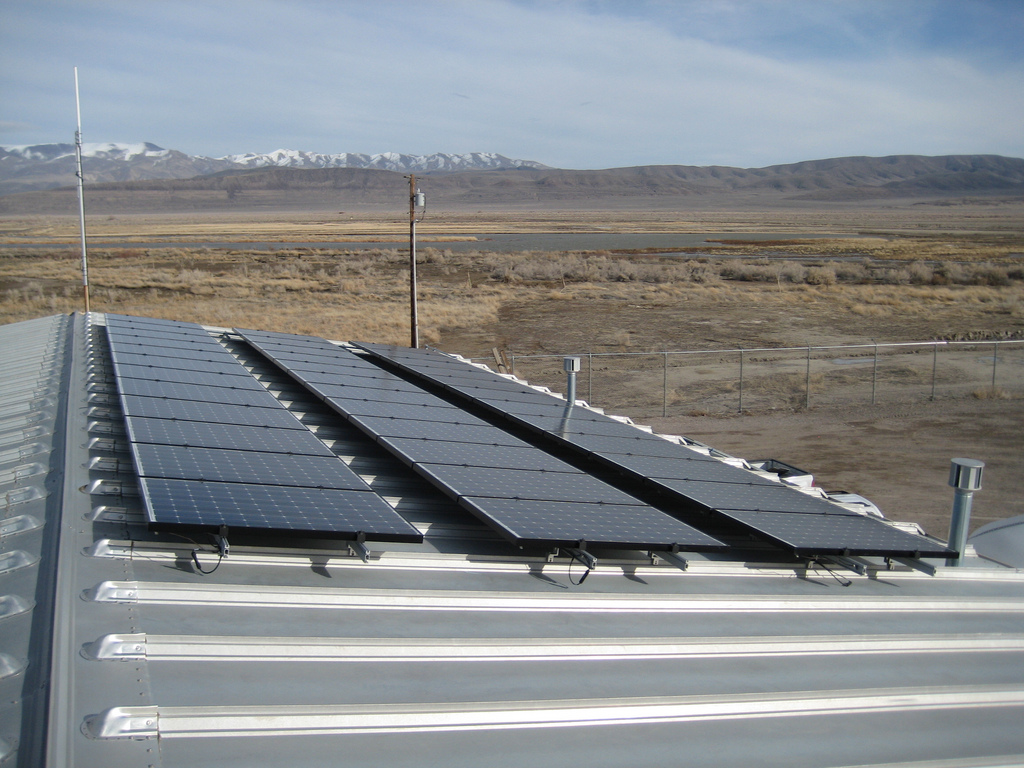
The city's project page provides a more specific solar record: 68 rooftop panels completed in 2025, with projected annual generation of 40,395 kWh and an expected contribution equal to about 42% of the building's energy consumption. Those are project projections; measured annual performance will depend on operating conditions and should be tracked separately.
Why daylight and electric lighting need one control strategy
Public-safety buildings operate around the clock, so daylight is valuable without eliminating the need for reliable electric illumination. Designers should coordinate window orientation, glare control, task requirements, occupancy patterns, dimming zones and emergency-lighting behaviour. Daylight-responsive control should reduce unnecessary consumption while preserving the illumination needed for watch offices, apparatus areas, circulation and overnight work.
Exterior lighting has a different balance. It must support vehicle movement, pedestrian safety, security cameras and emergency response while limiting spill beyond the site. Procurement documents should identify target illuminance, uniformity, glare limits, control schedules and boundaries where light trespass will be evaluated rather than relying on a general request for efficient LED fixtures.
Solar production should be measured against the real load profile
A percentage-of-consumption claim is only meaningful when its baseline and period are clear. Buyers should obtain the energy model, expected occupancy, equipment loads and weather assumptions, then compare them with interval data after handover. A public facility's load can change when staffing, vehicle charging, ventilation or emergency operations change.
The monitoring plan should separately record PV generation, imported electricity and major building loads where practical. Alarms for inverter faults or communications failures need an assigned recipient and response time. Without that ownership, a functioning building can conceal an underperforming solar asset for months.
Buyer impact: commission the facility as an integrated system
Public buyers should require coordinated commissioning for the PV array, lighting controls, emergency lighting, HVAC interfaces and metering. Acceptance records should include approved settings, sensor locations, control sequences, protective-device tests, monitoring access, training and a seasonal follow-up plan.
For municipal solar-lighting projects, the same principle applies at outdoor scale. Define the lighting outcome first, model the energy demand, size generation and storage around the operating profile, and verify the installed system at night and through monitored energy data. Certification can be a useful project milestone, but long-term value comes from measurable operation and maintainable documentation.
FREQUENTLY ASKED QUESTIONS
Questions this industry update may raise
How large is the fire station's rooftop solar array?
Charlottesville identifies it as a 31 kW system comprising 68 panels.
Does daylighting remove the need for electric lighting?
No. A 24-hour public-safety facility still needs task, circulation, exterior and emergency lighting. Daylight and controls can reduce avoidable use while maintaining required conditions.
What should be checked after handover?
Track PV generation and building consumption, verify lighting-control sequences and alarms, review nighttime exterior performance, close commissioning issues and compare measured results with the approved model.
SOURCES