
KEY TAKEAWAY
The project conditions should determine the solar lighting configuration.
The three main solar street light architectures solve different project problems. The best option is the one that matches the site's solar exposure, output requirement, pole design, maintenance plan and installation resources.
| Decision factor | All-in-One | All-in-Two | Split |
|---|---|---|---|
| Field installation | Fastest | Moderate | Most coordinated |
| Panel orientation | Linked to luminaire | Independent | Independent |
| Energy-system flexibility | Standardized | Flexible panel sizing | Maximum flexibility |
| Component service access | Integrated assembly | Panel separate | Separate components |
| Typical fit | Rapid deployment | Balanced project needs | High-output projects |
All-in-one: fastest installation and a clean visual profile
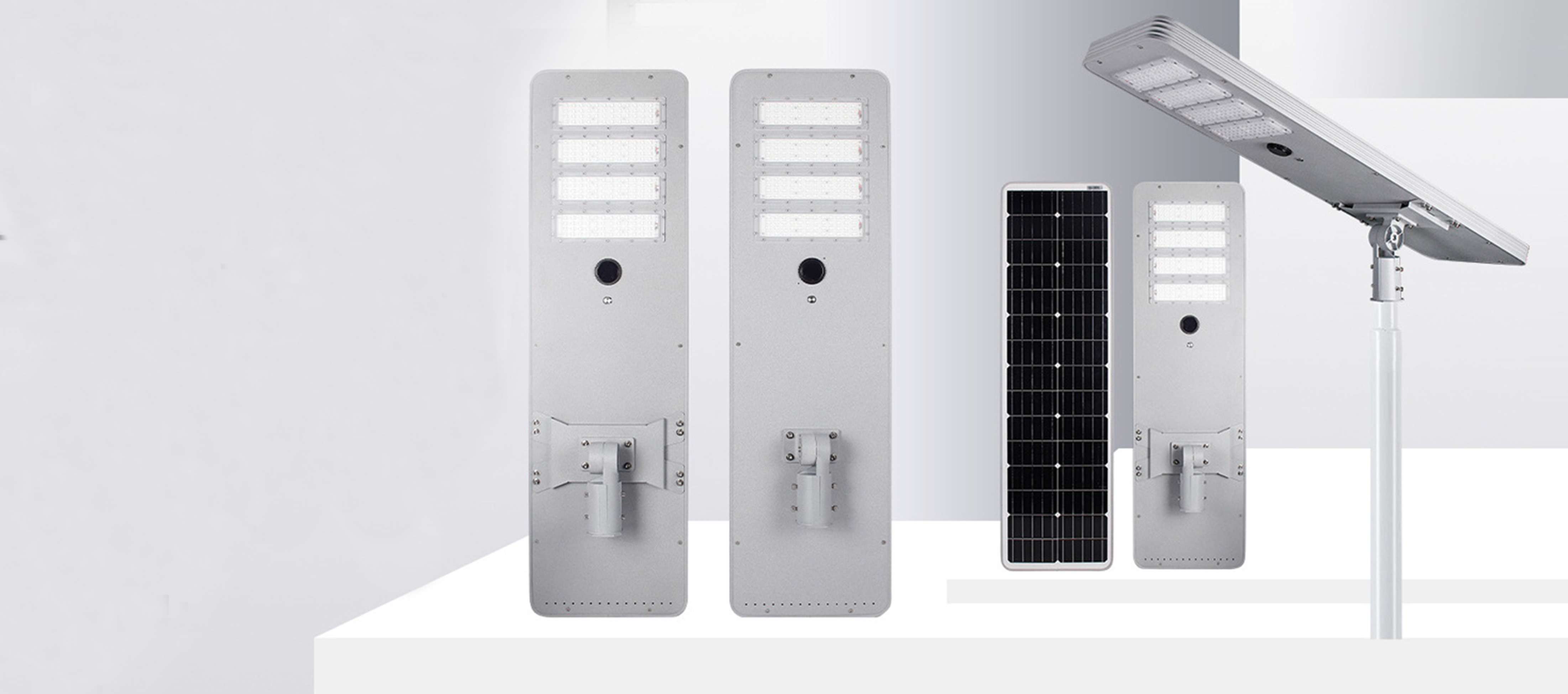
An all-in-one solar street light integrates the luminaire, solar panel, battery and controller into a compact assembly. It reduces field wiring and installation steps, making it well suited to rapid deployments and repeatable projects.
Because the panel is part of the luminaire, the pole orientation and lighting direction also influence solar-panel orientation. Check shading and solar access carefully, especially on roads where the luminaire must face a fixed direction.
- Best for fast, repeatable installation
- Minimal external wiring
- Clean integrated appearance
- Solar and luminaire orientation must work together
All-in-two: separate solar collection with fewer field modules
An all-in-two, or semi-integrated, system separates the solar panel from the luminaire while keeping the battery and controller integrated with the light. This allows the panel to be aimed for better solar exposure without creating a fully split equipment set.
It is a useful middle ground for projects that need more flexible charging orientation or panel sizing while still prioritizing simpler installation and a coordinated product assembly.
- Independent panel orientation
- Fewer components than a full split system
- Good balance of installation speed and energy flexibility
- Useful for roads with constrained luminaire direction
Split system: maximum capacity and service flexibility
A split solar street light uses separately mounted luminaire, solar panel, battery and controller components. This architecture offers the widest range of panel, battery and mounting options for high-output or demanding municipal projects.
Split systems require more installation coordination, cabling and component placement. In return, project teams gain flexible solar orientation, easier component-level service and greater freedom to size the energy system around long operating hours or high autonomy.
- Best for high-output or project-specific sizing
- Flexible panel and battery capacity
- Component-level service access
- More installation steps and field coordination
Side-by-side decision criteria
Use the decision table as a starting point, then verify the selected architecture against site irradiation, photometric targets and the operating schedule. Architecture selection comes before final wattage and battery sizing, not after it.
A practical selection sequence
First, define the lighting target and pole layout. Second, confirm the available solar exposure and whether the panel needs independent orientation. Third, agree on operating hours and backup nights. Finally, compare installation resources, service access and lifecycle expectations.
When two architectures appear suitable, request an energy configuration and photometric comparison for both. The better project choice may be the system with simpler installation, easier maintenance or more reliable seasonal charging rather than the highest nominal wattage.
FREQUENTLY ASKED QUESTIONS
Questions buyers ask before configuration
Which solar street light architecture is easiest to install?
All-in-one systems normally require the fewest field components and the least wiring, so they are usually the fastest to install.
Which architecture gives the most flexible solar-panel orientation?
All-in-two and split systems use a separate panel. Split systems provide the greatest overall flexibility for panel, battery and component placement.
Is a split solar street light always better for municipal roads?
No. The correct choice depends on output, solar exposure, autonomy, pole layout, maintenance practice and installation resources. Many municipal projects can use any of the three architectures when correctly engineered.
What should be compared besides purchase price?
Compare installation labor, pole and bracket requirements, energy reserve, component access, shipping volume, spare-parts strategy and expected maintenance conditions.